

Mushroom Coffee vs Mushroom Supplements
Which One Is For Me?
We dig into the ingredients to help you decide!
If your main goal is to get the benefits of functional mushrooms, full-spectrum supplements are a better choice. Liquid mushroom extracts can easily blend right into your current routine.
If you're just looking for lower caffeine and mushroom benefits don't play into your goals, then a quality mushroom drink may be a good choice for you.
Empower Your Choice
We are in no way suggesting that mushroom dinks are necessarily bad. It is in your best interest, though, to know what quality signals to look for if you do make that choice.
Our full-spectrum formulas are triple-extracted. The liquid format enables your body to absorb the active compounds easily. You can add it to your coffee, hot chocolate, or any beverage you like. You can chose your mushroom species based on your specific health goals.
Whether you choose a supplement or a powdered drink, there are a few things to know about what's in it.
The Ingredients List Tells It All
How can you tell quality from a label?
I'm obsessed with ingredients labels. You almost need a PhD in mycology (mushrooms) to decipher them. But everything you need to know is in there.
Let's break it down. There are words you DO and DO NOT want to see in the ingredients list:
What you DO want to see:
- 100% Fruiting Body or Fruiting Bodies. Research shows that fruiting body extracts are superior. Marketers sometimes argue this point, but the science is clear.
- Extract. You're looking for words like "Fruiting Body Extract" or "Reishi Extract". Bonus points if it says "dual extract". The beneficial compounds require extraction to be fully bioavailable.
What you do NOT want to see:
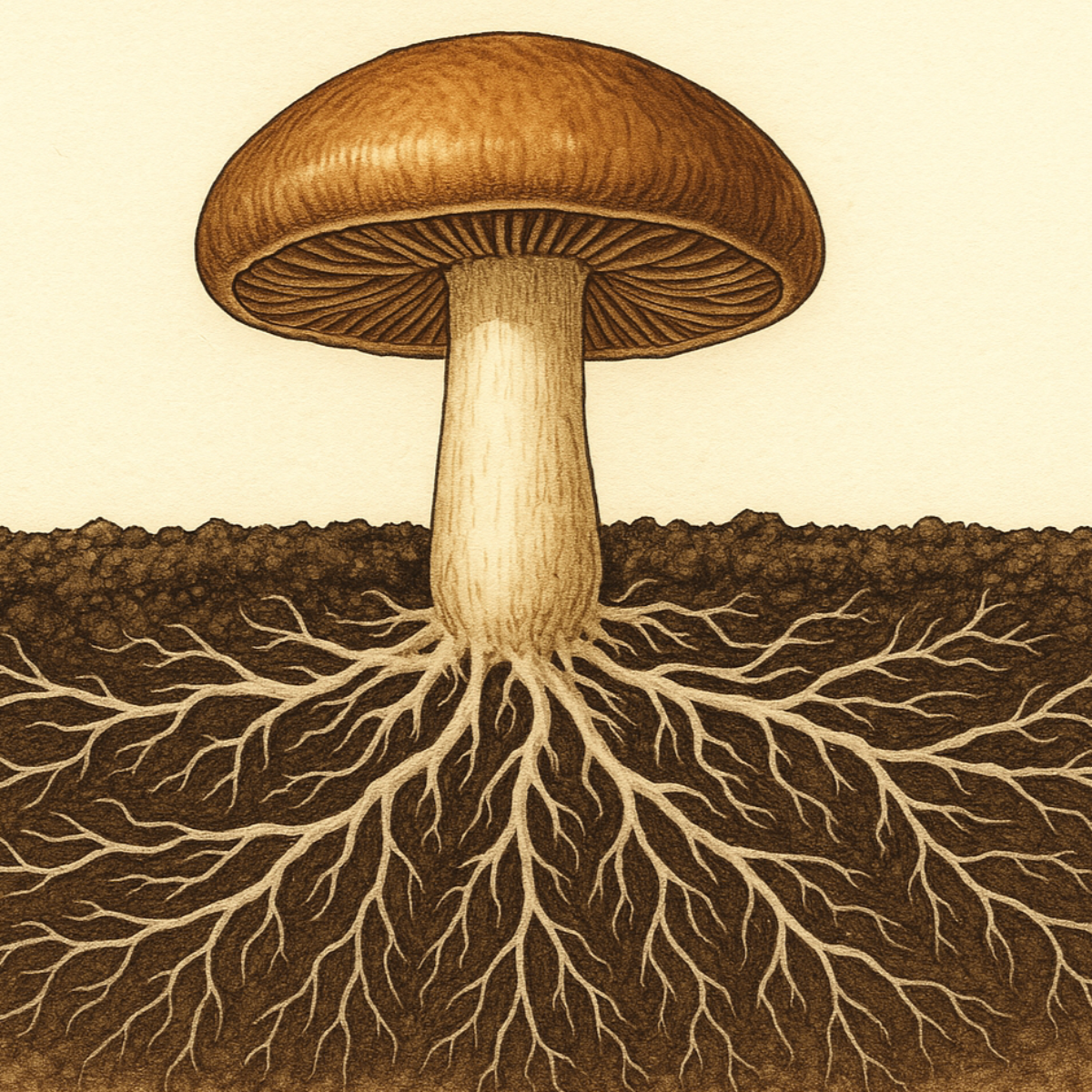
- Mycelium. You may also see "myceliated grain". More on this below, but the quick answer is mycelium is not the mushroom. It's basically the mushroom's root structure. Cheap, easy, quick, and used in most mushroom coffees and supplements for obvious commercial reasons.
- Powdered. Often you will see ingredients similar to "Powdered Lion's Mane Fruiting Body". If the ingredients simply state the mushroom variety, i.e. "Red Reishi Fruiting Bodies", you can assume that the mushrooms have not been through an extraction process. Extraction is expensive. Manufacturers claim it.
The Power of Fruiting Bodies
 The fruiting body is what we think of when we visualize a mushroom, like the shiitake fruiting bodies in the photo above. It grows out of what we call the mycelium. You'll often hear mycelium described as the root structure of the mushroom (even by us). That is not quite accurate, as mycelium is more complex than a simple root system.
However, mycelium does not contain the full spectrum of bioactive compounds available in the fruiting body. This is important, because there is definitive research showing that full-spectrum extracts are the most effective. The full spectrum of compounds is also increasingly believed to have an entourage effect (working better when they are together).
Here's the sneaky bit. Manufacturers are not required to list mycelium as an ingredient if they use an extract made from mycelium! They are technically allowed to say that it contains no mycelium, and technically, it does not, because it's an extract. Confusing, isn't it? Be safe and choose transparency. Those of us in the mushroom industry are proud to announce superior ingredients! If it doesn't say fruiting body, assume mycelium!
This ingredients list is from a popular brand. It lists the mushroom varieties, then says "and Mycelium cultured on Organic Oats...". There might be fruiting bodies in there, but there also might not be.

Another comparison might drive this home. It takes 3-5 months to plant, grow, and harvest mature mushroom fruiting bodies, depending on species. It takes 5-7 days for mycelium to develop enough to harvest as a supplement ingredient.
Imagine the cost benefits (profit) of using mycelium vs fruiting bodies in a supplement! That is the one and only reason that anyone would do it. There is no benefit to mycelium as an ingredient other than maximizing profit.
The mushroom coffee nutrition label, below, claims no mycelium and organic extracted mushrooms. There are two important things that are unclear.
The 'no mycelium' claim. Because this company is using a mushroom extract, they do not have to claim that the extract is made from mycelium and not fruiting bodies. I was gobsmacked when I learned this. It is right on the edge of being in violation of FDA ingredients rules, but technically, an extract is no longer mycelium, it's an extract. This product could be made using a fruiting body extract, but most manufacturers would state that clearly.
The label also does not state the amount of mushroom extract per batch or per serving. That omission is highly suspicious. I can guarantee that any product with a clinically relevant, organic fruiting body mushroom dose, is going to cost more to produce than their sales price of $0.37 per serving.


When it comes to mushroom supplements, fruiting body extracts are the clinically validated choice for potency and bioactive compounds. Unfortunately, mycelium-based ingredients result in missing or diluting beneficial compounds like beta-glucans and triterpenes.
Why Extraction is Critical
OK, so your ingredients label states "fruiting bodies". It does not contain "mycelium" or "myceliated grain". Great!
The next thing to look for is whether or not it contains a mushroom fruiting body extract or simply powdered mushrooms. This one is slightly more tricky.
Mushroom cells are surrounded by something called chitin (pronounced ky-tin). It is the same compound that lobster shells are made of. It is extremely tough and difficult for the human digestive system to break down. This means that without proper extraction, only a limited amount of the good stuff is available for your body to absorb. Our blog post 5 Things We've Learned About Mushroom Extraction digs into this if you'd like to know more.
What does this mean in real life? The truth is, only a small fraction of dehydrated and powdered mushrooms can be absorbed into your system without proper extraction. The research debates the amount, but the reduction in bioavailability is somewhere between 60-85%.
What makes me angry is when I see labels like the one below. 100-150 mg of unextracted mushroom powder per serving is not a clinically relevant dose. I am doubtful that there could be any measurable health benefit in that amount. I find it both misleading and unethical.

Here's another label from a leading mushroom coffee. We can only assume it is made of mushroom powder because they simply state that it's a blend.

*These statements have not been evaluated by the FDA. Druzy Fusion products are not intended to diagnose, treat or cure any disease

Written by Rebecca Richardson

1 comment
The main objective of mushroom coffee is not just to provide the nutrition, but also reduce the caffiene sensitivity without losing the satisfaction of coffee, especially for coffee lovers
Noomf Mushroom Coffee
Leave a comment
This site is protected by hCaptcha and the hCaptcha Privacy Policy and Terms of Service apply.