
Article: Can Functional Mushrooms Help with Menopause?
Can Functional Mushrooms Help with Menopause?
Strength, Metabolism & Recovery After 40
Although functional mushrooms aren't directly used to treat menopause, certain mushroom species have been studied for their effects on the biological systems that often change during the menopausal transition.
Interest in the relationship between functional mushrooms and menopause has grown in recent years as researchers explore how these fungi interact with biological pathways involved in metabolism, immune signaling, nervous system regulation and cellular energy production.
During perimenopause and menopause, many women notice shifts in metabolism, muscle mass, sleep quality, stress resilience, and cognitive clarity. Because functional mushrooms contain diverse bioactive compounds that interact with multiple physiological systems, they are increasingly being explored as part of a broader wellness strategy for supporting resilience during midlife.
In This Post:
- Why menopause affects more than hormones
- Strength and metabolism after 40
- Why recovery is as important as training
- How functional mushrooms support resilience
- FAQ's about mushrooms and menopause
Why Does Menopause Affect More Than Hormones?
Menopause is often discussed in terms of declining estrogen levels. While hormonal changes are central to the transition, they also trigger broader shifts throughout the body.
Many women notice changes in areas like:
- Metabolism and weight regulation
- Muscle mass and strength
- Sleep quality
- Stress tolerance
- Cognitive clarity
It's a lot. These changes occur because menopause influences systems throughout the body, including metabolic regulation, nervous system signaling, immune activity and bone loss/metabolism.
Supporting the health of these systems can play an important role in maintaining resilience during midlife.
Why Strength and Metabolism Change During Menopause
Muscle mass naturally declines with age. This process often accelerates during the menopausal transition. This gradual loss of muscle mass is called sarcopenia.
Muscle tissue plays an important role in:
- Glucose metabolism
- Insulin sensitivity
- Metabolic rate
- Physical stability and balance
Because of this, many experts now emphasize strength training as one of the most important lifestyle interventions for maintaining metabolic health during midlife.
However, muscle growth and metabolic adaptation depend on more than exercise alone.
They depend on the body’s ability to recover and adapt to training stress.
Metabolic shifts during menopause can also influence insulin sensitivity and energy regulation.
The Overlooked Role of Recovery
Strength gains and metabolic improvements occur during recovery, not during the workout itself.
Each strength training session creates controlled stress in the body. During recovery, biological systems work together to repair tissues, restore energy, and adapt to that stress.
Several systems play key roles:
- The immune system helps regulate inflammation and repair tissues.
- The nervous system manages the body's stress response and signals when it is safe to shift into recovery mode.
- Metabolic pathways regulate energy production and cellular repair.
When these systems function well, the body adapts to training and becomes stronger over time. But, midlife can introduce new challenges to recovery. Hormonal shifts, sleep disruption, and chronic stress can all influence how efficiently the body recovers.
Supporting the Body’s Resilience
Traditional herbal systems have long focused on supporting the body’s resilience rather than targeting a single symptom. Functional mushrooms are a good example of this philosophy.
Species such as Lion's Mane, Red Reishi, Maitake and Turkey Tail contain complex arrays of bioactive compounds that interact with multiple physiological pathways.
Research has explored how these compounds may influence the systems involved in:
- Immune balance
- Metabolic signaling
- Nervous system regulation
- Inflammatory responses
Because these systems contribute to recovery, metabolic health, and stress adaptation, maintaining their balance may help support resilience during midlife.
Rather than acting as quick stimulants, functional mushrooms are typically used as long-term nutritional support for physiological balance.
Can Cordyceps Support Energy and Endurance?
Cordyceps has been studied for its effects on cellular energy production and oxygen utilization.
Compounds found in Cordyceps have been investigated for their influence on:
- ATP production
- Oxygen utilization
- Endurance capacity
These mechanisms help explain why Cordyceps has traditionally been used to support stamina and physical performance.
For individuals increasing their activity levels during midlife, maintaining energy availability may help support consistent training and recovery.
Building Strength and Resilience in Midlife
Healthy aging is built through consistent lifestyle practices that support the body’s natural resilience.
For many women, maintaining metabolic health during midlife may include:
- Regular strength training
- Adequate dietary protein
- Restorative sleep
- Stress management
- Nutrient-dense foods and supportive botanicals
Together, these habits help support the body’s ability to adapt, recover, and maintain resilience through the menopausal transition.
Functional mushrooms can play a role in this broader strategy by supporting the physiological systems involved in metabolism, recovery, and nervous system balance.
FAQ
Why Are Functional Mushrooms Being Studied for Midlife Health?
Functional mushrooms contain diverse bioactive compounds that interact with multiple biological pathways.
Researchers have investigated how these compounds influence immune signaling, metabolic regulation, nervous system activity, and inflammatory processes. Because many of these systems change during menopause, mushrooms are increasingly being explored in discussions about resilience and healthy aging.
Can mushrooms help with menopause symptoms?
Functional mushrooms are not a medical treatment for menopause. However, research suggests certain mushroom species may support the biological systems involved in stress regulation, metabolism, immune function, and cognitive health.
Which mushrooms are best for menopause support?
Several species are commonly discussed:
Lion’s Mane – studied for neural signaling and cognitive support
Red Reishi - traditionally used to support relaxation and stress resilience
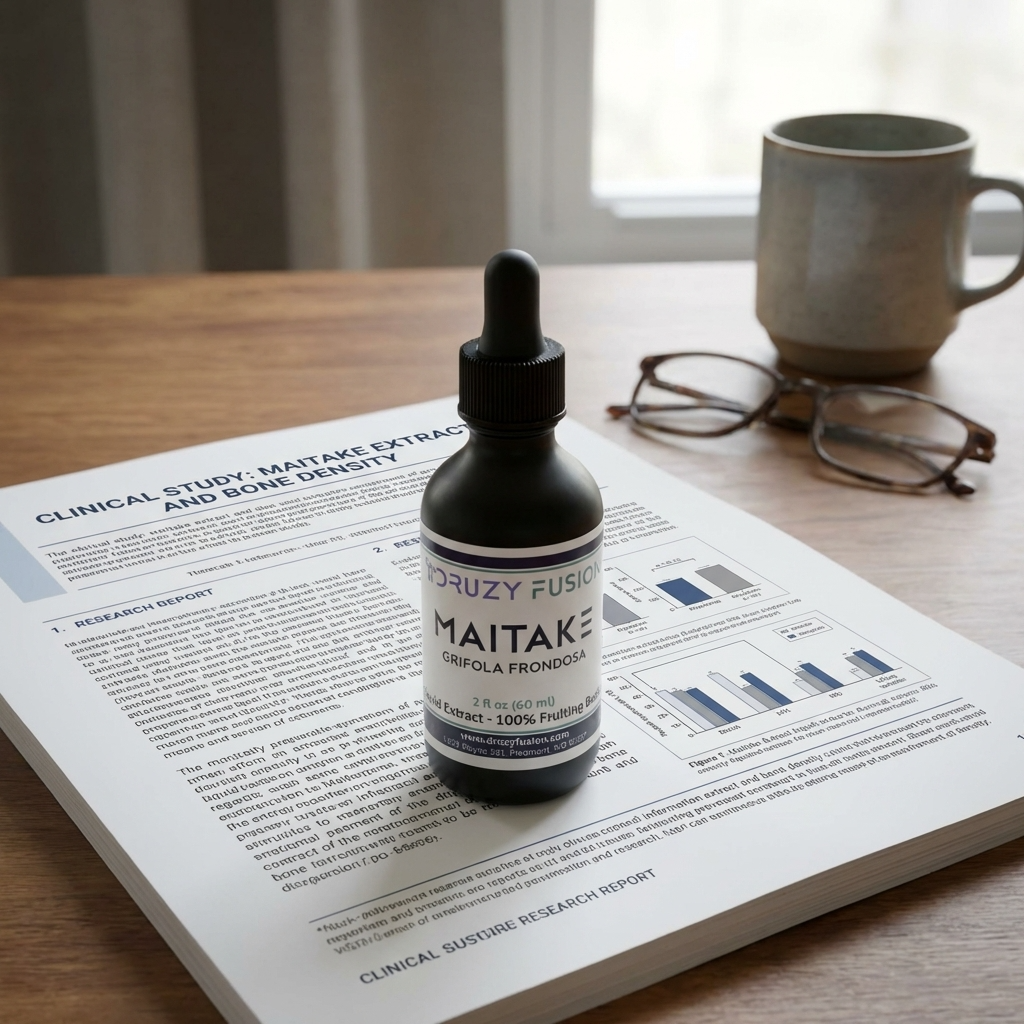
Maitake - researched for metabolic signaling, glucose regulation and bone health
Turkey Tail - studied for immune modulation
Cordyceps - researched for cellular energy and endurance
Our Transition Bundle contains them all. The Foundation blend provides the daily baseline. Cordyceps supports energy and endurance and Red Reishi is our go-to for restful sleep and a calm mind. Together, this bundle provides energy & focus during the day and supports a restful sleep at night.
Why is it harder to build muscle after menopause?
Hormonal changes during menopause can influence muscle protein synthesis, metabolic signaling, and recovery. Strength training and supportive lifestyle habits can help maintain muscle mass.
Can functional mushrooms help with menopause brain fog?
Lion’s Mane has been studied for compounds that influence neural signaling and neuroplasticity, which may support cognitive resilience.
Are mushrooms estrogenic?
Functional mushrooms are not considered phytoestrogens like soy. Some compounds have been studied for interactions with enzymes involved in hormone metabolism, but mushrooms are not known to increase estrogen levels.
Can mushrooms help with menopause weight gain?
Weight gain during menopause is often linked to changes in metabolism and muscle mass. Some mushrooms such as Maitake have been studied for their potential role in metabolic signaling.
Do functional mushrooms help with menopause fatigue?
Fatigue is very common during menopause. Cordyceps has been studied for its influence on cellular energy production and oxygen utilization.
Can mushrooms support bone health after menopause?
Bone density often declines during menopause. Some research has explored compounds in mushrooms such as Maitake for their potential influence on pathways involved in bone metabolism.
Selected Research and Scientific Context
Scientific interest in functional mushrooms has grown significantly over the past two decades. Research has examined compounds found in Lion's Mane (Hericium erinaceus) for its influence on nerve growth factor pathways and neural signaling, Maitake (Grifola frondosa) for metabolic and glucose-related signaling pathways, and Cordyceps (Cordyceps militaris) for effects on cellular energy production and oxygen utilization.
These studies do not suggest mushrooms as a direct treatment for menopause itself, but they help explain why researchers are so interested in how they interact with the biological systems involved in metabolism, cognition and resilience in midlife.

Written by Rebecca Richardson


Leave a comment
This site is protected by hCaptcha and the hCaptcha Privacy Policy and Terms of Service apply.